

Kompakt-Raupenlader Zum Verkauf
Alle
Auktion
Jetzt kaufen
Kategorien: Kompaktraupenlader
2.1k Ergebnisse
Schließt: Do., 17. Dez.
Schließt: Do., 17. Dez.
Schließt: Do., 17. Dez.
Schließt: Do., 17. Dez.
Schließt: Do., 17. Dez.
Schließt: Do., 17. Dez.
Schließt: Do., 17. Dez.
Schließt: Do., 17. Dez.
Schließt: Do., 17. Dez.
Schließt: Do., 17. Dez.
Schließt: Do., 17. Dez.
Schließt: Do., 17. Dez.
Schließt: Do., 17. Dez.
Schließt: Do., 17. Dez.
Schließt: Do., 17. Dez.
Lake Worth, TX
Schließt: Do., 17. Dez.
Lake Worth, TX
Schließt: Do., 17. Dez.
Lake Worth, TX
Schließt: Do., 17. Dez.
Lake Worth, TX
Schließt: Do., 17. Dez.
Lake Worth, TX
Schließt: Do., 17. Dez.
Lake Worth, TX
Schließt: Do., 17. Dez.
North East, MD
Schließt: Mi., 3. Feb.
Schließt: Do., 12. Nov.
Schließt: Do., 12. Nov.
Schließt: Do., 12. Nov.
- .
Phoenix, AZ
2.800 Std
Schließt: Di., 17. Nov.
Schließt: Mi., 18. Nov.
- .
Davenport, FL
1.461 Std
Schließt: Do., 19. Nov.
Schließt: Do., 17. Dez.
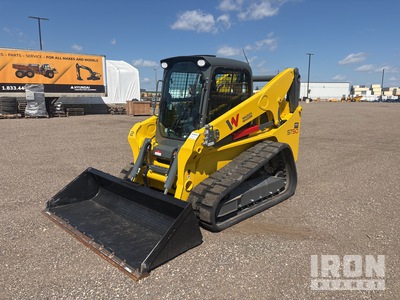 .
Saskatoon, Kanada
19 Std
$125,000CADoder Angebot machen
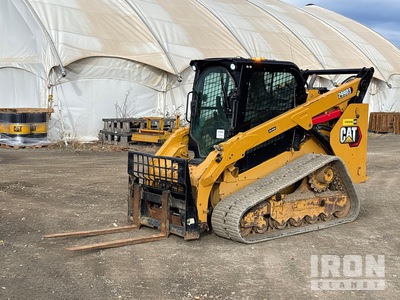 .
Whitehorse, Kanada
4.230 Std
 .
McCreary, Kanada
2.414 Std
$94,900CADoder Angebot machen
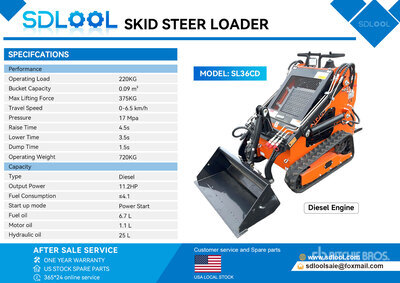
Drury, Neuseeland
- .
Trenton, SC
300 Std
- .
Duncan, SC
1.392 Std
Farmington, NH
- .
Raleigh, NC
3.178 Std
- .
Raleigh, NC
3.515 Std
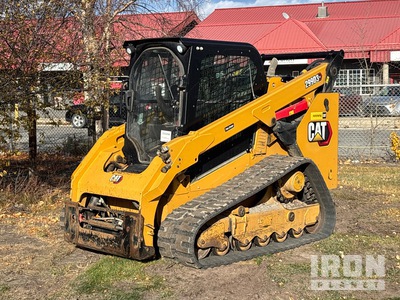
Hendersonville, NC
Nicholasville, KY


1981-2040 bis 2162
What is a compact track loader used for?
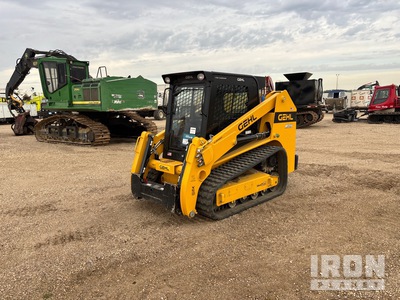
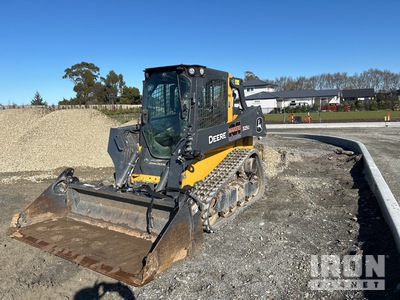
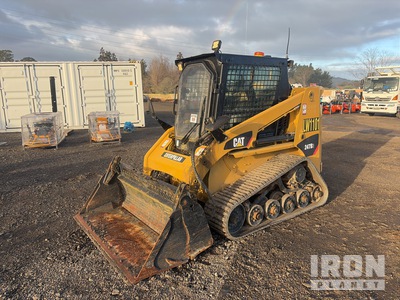
Compact track loaders (CTLs) are used for landscaping, grading, demolition, site prep, and material handling where ground conditions are soft, wet, or uneven. The rubber track undercarriage spreads the machine's weight over a larger footprint than a wheeled loader, giving CTLs lower ground pressure and better flotation on mud, sand, turf, and snow. With the right attachment - bucket, grapple, auger, or brush cutter - a compact track loader can handle grading, clearing, trenching, and loading on the same job site.
Compact track loader or skid steer - which should I buy?
The core difference is the undercarriage: compact track loaders run on rubber tracks, while skid steers run on tires. Tracks give CTLs better traction and flotation on soft or uneven ground, less lawn and surface damage, and a smoother ride, which is why they're the common choice for landscaping, turf work, and wet or muddy sites. Skid steers are typically less expensive to buy and maintain, faster on hard, flat surfaces like pavement or gravel, and a good fit for sites where undercarriage wear from rock and debris is a concern.
What size compact track loader do I need?
Compact track loaders are generally grouped by rated operating capacity (ROC): small-frame models (under roughly 1,750 lbs ROC) suit light landscaping and tight-access jobs, mid-frame models (roughly 1,750-2,200 lbs ROC) cover most general construction and site work, and large-frame models (over 2,200 lbs ROC) handle heavier material handling, grading, and demolition work. Match the ROC and horsepower to the heaviest attachment and material you plan to run, not just the lightest job on site.
What should I check before bidding on a used compact track loader?
Before bidding on a used compact track loader, check the undercarriage first - rubber track wear, sprocket and roller condition, and track tension account for a large share of ownership cost. Also check engine and hydraulic hours, look for hydraulic leaks at the pump, motors, and cylinders, test all attachment functions including auxiliary hydraulics, and inspect the cab, lift arms, and bucket or attachment coupler for wear or damage. Service records and recent undercarriage replacement are a strong sign of a well-maintained machine.
Ready to bid? Browse used compact track loaders for sale in upcoming unreserved auctions. Need to sell a compact track loader instead? Get a free equipment valuation today.